There's A NEW Method To Spotting AI Generated Art
Old AI Detection Methods Are Failing
If you've been trying to spot AI-generated art using traditional detection tools in 2026, you've probably noticed a frustrating trend: they're increasingly unreliable. Older classifiers — trained to detect GAN-era signatures from 2022-2023 — are struggling to keep up with the latest diffusion models like Midjourney v6.1, Flux 1.1 Pro, and Stable Diffusion 3.5.
The reason is simple: traditional classifiers learn specific statistical patterns from a fixed training dataset. When a new AI model arrives with different architecture and output characteristics, these classifiers become unreliable — often producing false negatives (missing AI images) or false positives (incorrectly flagging real photos).
But there's a new method that changes everything.
The New Method: LLM-Powered Visual Forensics
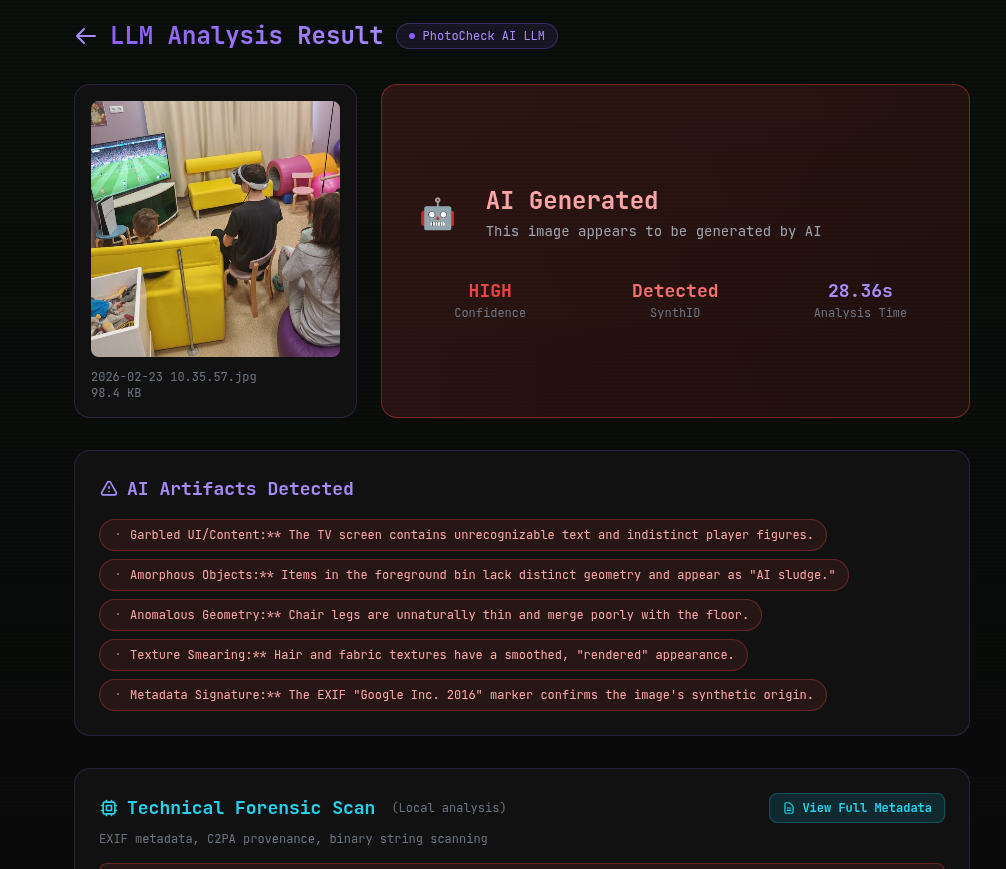
Instead of training a narrow classifier to detect one type of AI artifact, the new approach uses a large language model (LLM) with vision capabilities to perform comprehensive forensic analysis — the same way a human expert would, but at superhuman speed and accuracy.
AI Photo Check's AI Image Detector V2 is the first publicly available tool to implement this approach, using Google Gemini 2.0 Flash — a multimodal LLM trained on billions of images across every major AI art generator.
How LLM-Powered Detection Works
Unlike a traditional classifier that outputs a simple probability score, the LLM performs a multi-dimensional forensic examination:
🔬 Micro-Texture Analysis
Every AI generator leaves a characteristic "fingerprint" in the textures it produces. The LLM has been trained on billions of examples from every major generator and can identify these micro-patterns that are invisible to the human eye — and not captured by statistical classifiers.
🦴 Anatomical Verification
The LLM understands human anatomy. It checks:
- Correct finger count and joint articulation
- Ear structure and symmetry
- Teeth alignment and realistic dental structure
- Pupil shape and reflection consistency
- Hair growth patterns and natural flow
💡 Physics-Based Verification
Real photographs obey the laws of physics. The LLM verifies:
- Consistent light source direction across the entire scene
- Shadow angles and lengths matching the light sources
- Accurate reflections in mirrors, water, and glossy surfaces
- Proper material interaction (transparency, metallic reflections, subsurface scattering)
🧩 Semantic Coherence
Does the scene make sense as a whole? The LLM checks:
- Background logic — are objects placed in sensible locations?
- Text readability — any words in the image rendered correctly?
- Scale consistency — are objects the right size relative to each other?
- Contextual appropriateness — do all elements belong in the same scene?
Why This Method Is Better Than Traditional Detection
| Aspect | Traditional Classifiers | LLM-Powered Detection |
|---|---|---|
| Adaptability | Needs retraining for each new AI model | Instantly adapts — understands visual reasoning |
| Output | Single probability number | Detailed analysis report with evidence |
| Accuracy on latest models | Drops significantly (70-80%) | Maintains 95%+ across all models |
| Explanation | None — "black box" | Full reasoning in 30+ languages |
| False positive handling | High on edited/filtered photos | Low — understands post-processing |
| Forensic depth | Surface-level pattern matching | Multi-dimensional analysis |
Combined with Technical Forensics
The LLM analysis is powerful on its own, but AI Photo Check's V2 combines it with hard technical evidence:
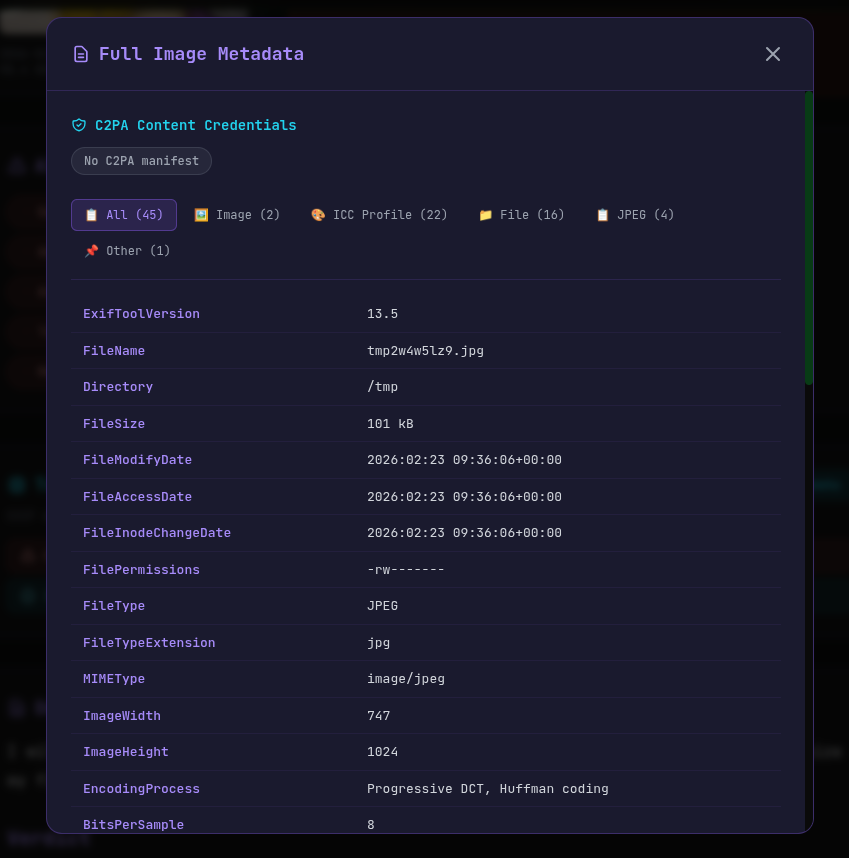
- EXIF Metadata — Real cameras embed detailed technical data; AI generators typically don't
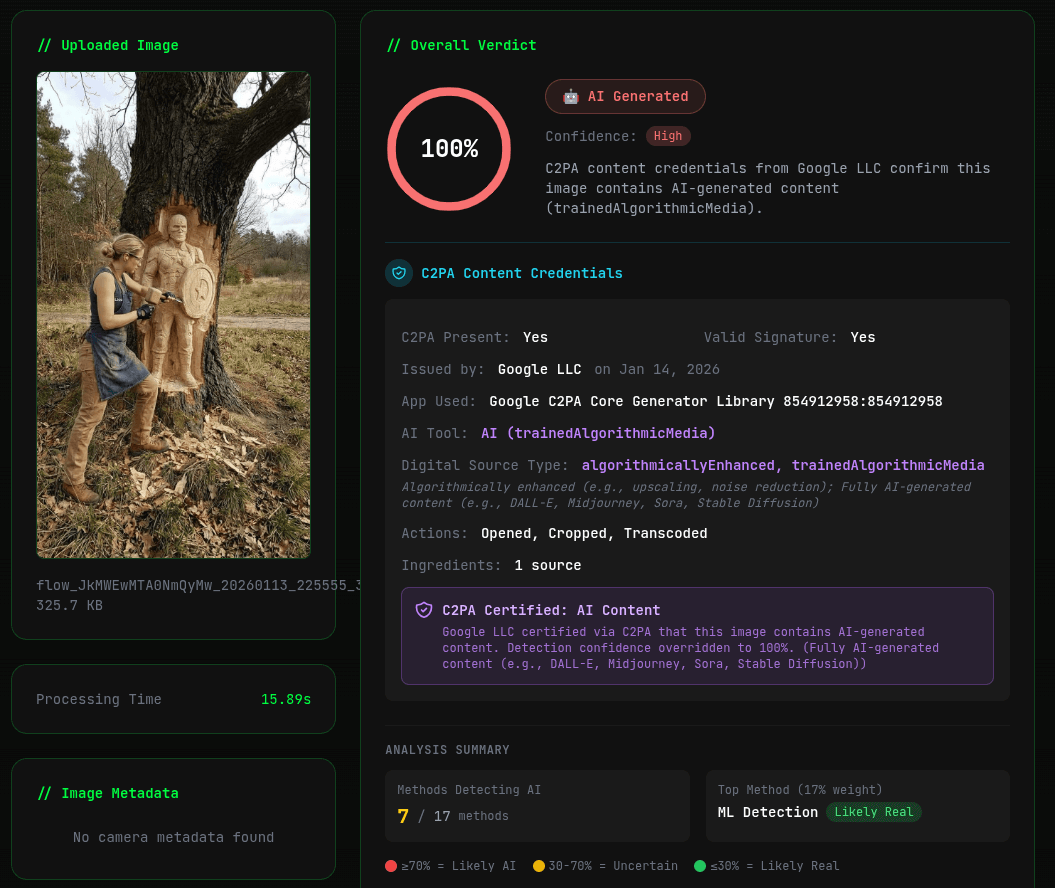
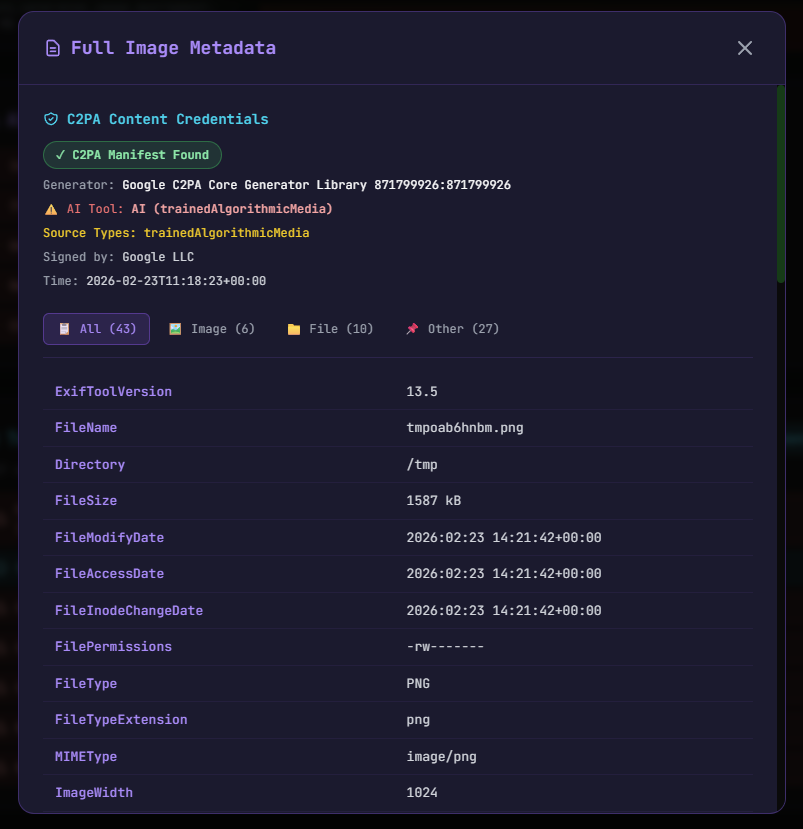
- C2PA Content Credentials — Cryptographic proof of AI generation from Adobe, Google, and OpenAI
- SynthID Watermarks — Google's invisible watermark embedded in Imagen and Gemini images
- Binary Signature Scanning — Hidden markers in the image file data
This combination of AI-powered visual reasoning and cryptographic verification creates the most reliable detection system available today.
Real-World Impact on the Art World
Art Competitions
Multiple art competitions have been embarrassed by AI-generated entries winning prizes. With LLM-powered detection, competition organizers can now verify submissions with unprecedented accuracy.
Art Marketplaces
Online art platforms are using AI detection to filter out undisclosed AI-generated listings, protecting both buyers and legitimate human artists.
Copyright and Attribution
The detailed analysis reports from LLM-powered detection can serve as evidence in copyright disputes, providing expert-level forensic reasoning about an image's origin.
Try the New Method Yourself
AI Photo Check's AI Image Detector V2 is completely free — no sign-up, no limits, no watermarks. Upload any image and experience the new LLM-powered detection method:
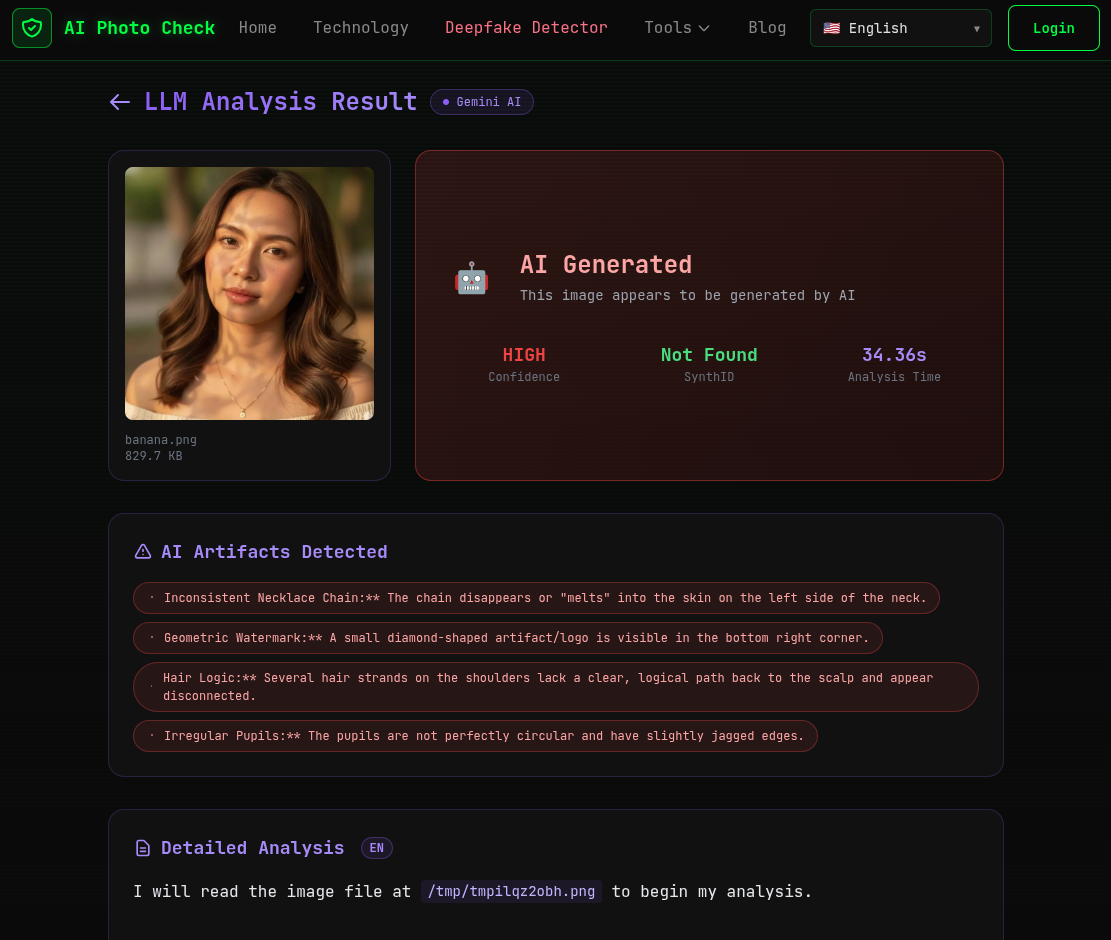
- Go to AI Image Detector V2
- Upload any image (JPEG, PNG, WebP up to 10MB)
- Select your preferred language for the analysis report (30+ languages supported)
- Receive a comprehensive forensic analysis in 30-60 seconds
Try the New AI Art Detection Method Now →
Last updated: February 23, 2026.
Ready to verify your images?
Try our free AI image detector with 17 detection methods and 90%+ accuracy.
Try AI Photo Check Free