AI Detection Tools: How to Spot Generated Content 2026
The AI Detection Landscape in 2026
As AI-generated content has exploded in volume and quality, an entire ecosystem of AI detection tools has emerged to help identify synthetic media. From simple visual classifiers to advanced multi-modal analysis engines, the tools available in 2026 range widely in capability, accuracy, and approach.
In this comprehensive comparison, we examine the most effective AI detection tools available today and explain how they work, their strengths and limitations, and which ones deliver the best results.
Understanding AI Detection Methods
Before comparing tools, it's important to understand the different approaches they use:
1. Classification-Based Detection
Traditional AI detectors use neural network classifiers trained to distinguish between real and AI-generated images. These typically output a single probability score.
- Pros: Fast, simple output
- Cons: Accuracy drops rapidly with new AI models; can be easily fooled by post-processing; offers no explanation for the verdict
2. LLM-Powered Visual Analysis
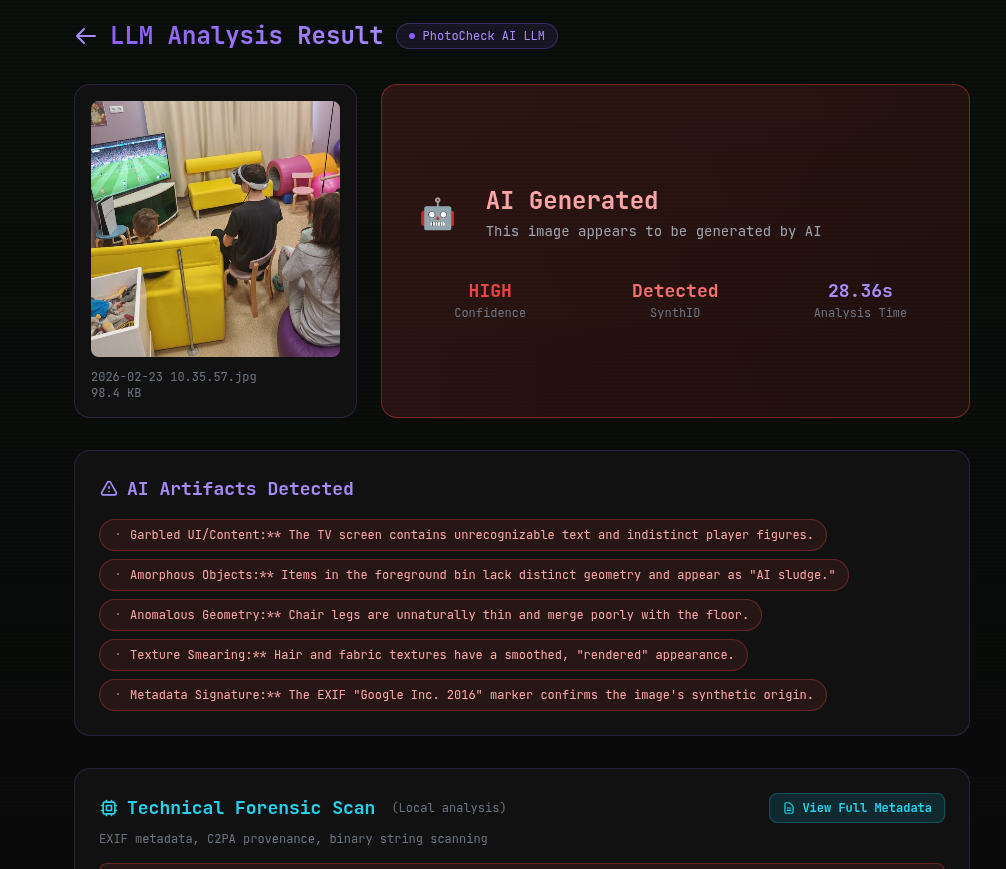
The newest approach uses large language models (LLMs) with vision capabilities to perform deep semantic analysis of images, examining textures, physics, anatomy, and coherence.
- Pros: Highly adaptable to new AI models; provides detailed explanations; analyzes multiple dimensions simultaneously
- Cons: Slightly slower; requires more computational resources
3. Metadata & Provenance Analysis
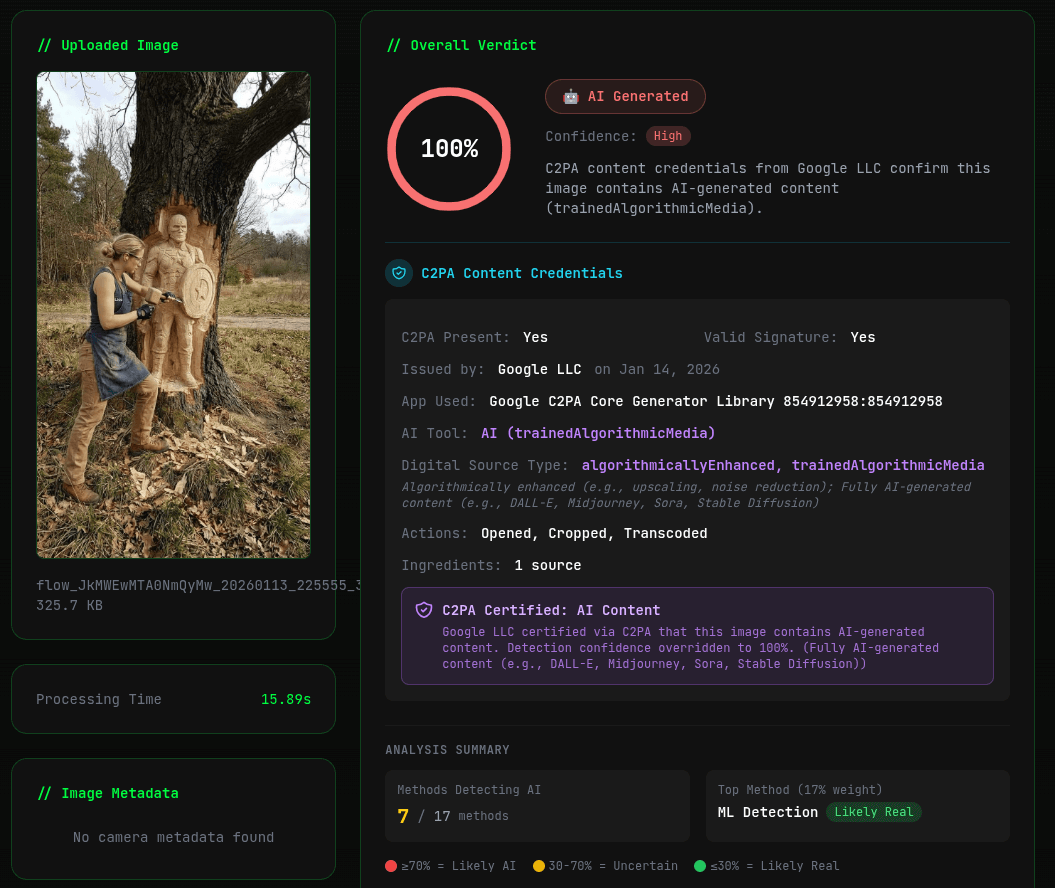
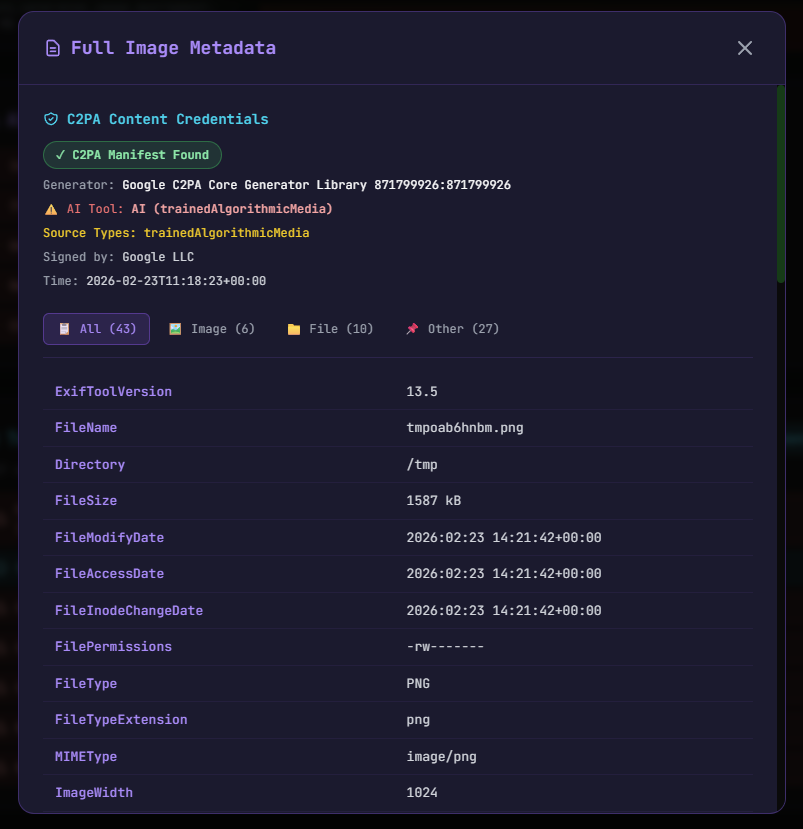
Content credential verification — checking EXIF data, C2PA manifests, and digital watermarks — provides hard technical evidence about an image's origin.
- Pros: Definitive when present; cryptographically verifiable; no false positives
- Cons: Can be stripped by saving/screenshotting; not all AI generators embed credentials
4. Frequency & Statistical Analysis
Forensic tools that analyze frequency spectra, noise patterns, and compression artifacts to detect statistical signatures of AI generation.
- Pros: Works on heavily processed images; detects even partial AI manipulation
- Cons: High false positive rates; requires expertise to interpret
AI Photo Check V2: The Multi-Layer Approach
AI Photo Check takes a unique approach by combining all four detection methods into a single, comprehensive analysis:
| Feature | AI Photo Check V2 | Typical Classifiers |
|---|---|---|
| Detection Method | Multi-layer (LLM + forensic + provenance) | Single classifier |
| Accuracy | 95%+ across all major models | Varies by model (70-90%) |
| Explanation | Detailed reasoning in 30+ languages | Probability score only |
| Models Covered | All major (Midjourney, DALL-E, SD, Flux, etc.) | Limited to training data |
| Metadata Analysis | ✅ Full EXIF, C2PA, SynthID | ❌ Usually none |
| False Positive Rate | < 3% | 5-15% |
| Cost | Free | Often paid/limited free tier |
| Account Required | No | Usually yes |
Specialized Detection Tools Worth Knowing
C2PA Content Credential Checkers
For images from C2PA-compliant sources (Adobe Firefly, Google Imagen, Microsoft Designer), a dedicated C2PA Checker provides definitive proof of AI generation through cryptographic verification.
EXIF & Metadata Viewers
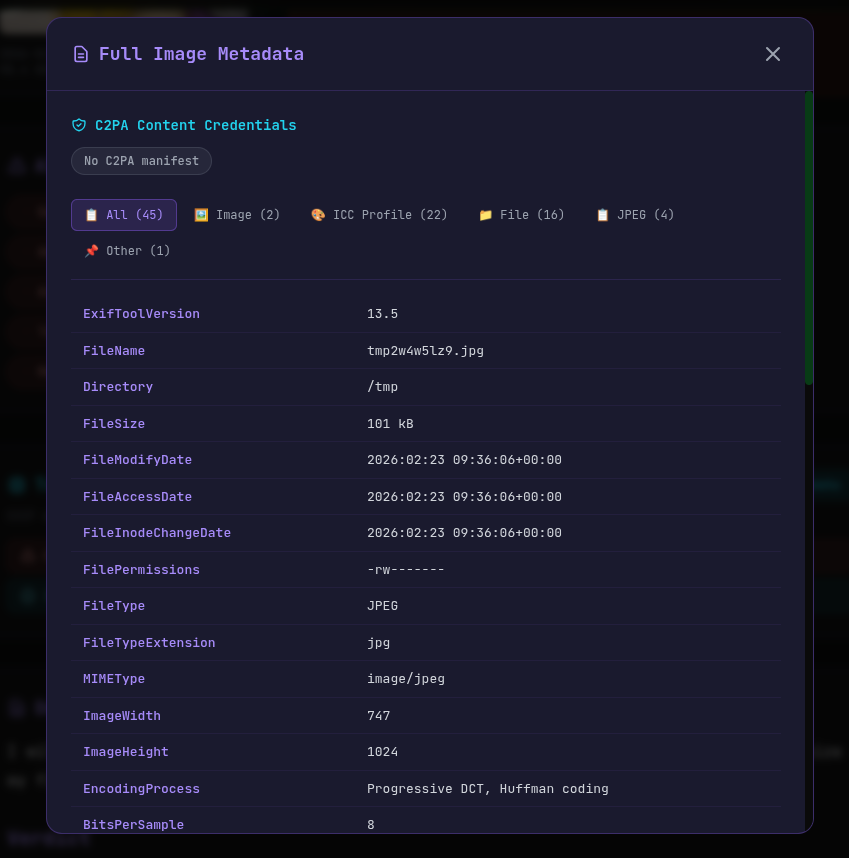
Tools like AI Photo Check's EXIF Viewer let you inspect the complete metadata of an image. Missing camera data is a strong indicator of AI generation.
Forensic Analysis Tools
Advanced forensic tools available at AI Photo Check's toolbox include:
- Frequency Spectrum Analyzer — Reveals spectral patterns unique to AI generators
- PRNU Noise Analyzer — Checks for camera sensor noise patterns absent in AI images
- Compression Artifact Analyzer — Detects inconsistencies in JPEG compression
- Micro-Texture Analyzer — Examines pixel-level texture patterns
Choosing the Right Tool for Your Use Case
| Use Case | Recommended Tool | Why |
|---|---|---|
| Quick verification | AI Detector V2 | One upload, complete analysis |
| Google/Adobe AI images | C2PA Checker | Definitive credential verification |
| Metadata investigation | EXIF Viewer | Complete technical metadata |
| Professional forensics | Full Toolbox | Multiple forensic analysis tools |
| Batch analysis | AI Photo Check API | Programmatic access for high volume |
Tips for Best Detection Results
- Use the original image — Detection accuracy drops with screenshots or heavily compressed images. Always try to get the highest quality version available
- Check multiple layers — Don't rely on a single method. Combine visual analysis with metadata checking and AI detection for the most reliable results
- Consider C2PA first — If an image has valid C2PA credentials indicating AI generation, that's your definitive answer — no further analysis needed
- Understand false positives — Heavily filtered or post-processed real photos can sometimes trigger AI detectors. Look at the complete evidence before concluding
- Stay current — Detection tools improve rapidly. Use tools that are regularly updated with the latest AI model signatures
Try the Best AI Detection Tool — Free, No Account Required →
Last updated: February 23, 2026.
Ready to verify your images?
Try our free AI image detector with 17 detection methods and 90%+ accuracy.
Try AI Photo Check Free